Monday, March 28, 2011
People Love Animals
Exotic pets could be a psychological thing for people. Some people get satisfaction from owning something that not many others have. Others like feeling like they're giving the animal a better life than the wild could provide. Unfortunately, keeping these animals as a possession only hinders their species survival and creates a false atmosphere around them. Living in a nice house with humans isn't the natural habitat for wild creatures. If they ever get loose or get released, they won't know how to survive.

Context Statement Version 1.0
Not many people are aware of the increasing problem of owning an exotic pet. If more people were aware of the fact that only about thirty percent of the animals that are transported actually make it to the destination alive. Some people also don't realize the horrible situations these animals are put into. Not only is it unmoral to abuse these creatures, but the populations of species are being devastated in some regions due to the hunting for ownerships. Funds should be put in place for law enforcement to save these animals and prevent it from happening.
Thursday, March 24, 2011
Laws Concerning Exotic Pets
Bornfreeusa.org is a website that lists current laws for each state concerning the ownership of exotic pets. I've listed the full information for Indiana, word-for-word from the site. I think most would be surprised at what one can adopt as a pet as long as they have a license.
INDIANA
Category: L
Summary of Law: All persons who possess certain wild animals must obtain a permit for each animal they possess. A wild animal possession permit is required for Class I animals (eastern cottontail rabbit, gray squirrel, fox squirrel, southern flying squirrel) Class II animals (beaver, coyote, gray fox, red fox, mink, muskrat, opossum, raccoon, skunk, weasel) and Class III animals: wolves (purebred), bears, wild cats (excluding feral cats), venomous reptiles and crocodilians (at least 5 feet long)
L = Requires the "owner" of the exotic animal to obtain a license or permit or to register the animal with state or local authorities to privately possess the animal (excludes states only requiring import permits)
As for the other states:
- Alabama, Idaho, Michigan, Montana, Nevada, North Carolina, Ohio, and South Carolina doesn't require an official license to own an animal, but may need some form of a permit or a veterinary certificate.
- Alaska, California, Colorado, Connecticut, Georgia, Hawaii, Iowa, Kentucky, Maryland, Massachusetts, New Hampshire, New Jersey, New Mexico, New York, Oregon, Tennessee, Utah, Vermont, Washington, and Wyoming have a ban on the private ownership of any exotic animal.
- Arizona, Delaware, Florida, Maine, Mississippi, Missouri, Montana, North Dakota, Oklahoma, Pennsylvania, Rhode Island, South Dakota, and Texas require the exotic pet owner to require a license and/or register the animal with the state or local authorities.
- Arkansas, Florida, Illinois, Kansas, Louisiana, Michigan, Minnesota, Nebraska, and Virginia only allow certain exotic pets. Each state has their own specific species and types that are illegal.
- West Virginia and Wisconsin have no laws for exotic pets.
"When Miami airport inspectors asked a man arriving from Havana, Cuba to raise his pants legs, they were surprised to find 44 birds strapped to his legs. The man had denied he was bringing any wildlife into the United States. He was released the next day on $50,000 bond after being charged with lying on a customs declaration form.
The illegal trade in wildlife is second only to that of drugs in the United States, according to the U.S. Fish and Wildlife Service (FWS). A former FWS chief of law enforcement said, 'There is no stigma attached to being an animal smuggler. If you get caught illegally transporting animals on a first offense, it’s possible you won't even do jail time. You can’t say the same for running drugs.'"
Wednesday, March 23, 2011
Charles Bergman Goes Undercover
This piece is from an article by Lee Hughes, who explains how a man by the name of Charles Bergman went undercover as a New York pet shop owner to find out the dirty secrets of the animal trading world.
"Armed with a $500 wad of cash belonging to the U.S. Fish and Wildlife Service, he quickly found a seller of exotic birds in an outdoor Hispanic flea market near the Rio Grande in Brownsville, Texas. The seller offered Bergman a look at the merchandise. Stuffed three to five at a time inside several filthy paper grocery bags were harassed and disheveled looking parrots, nearly suffocating in the hot trunk of a rusty car. Fish and Wildlife agents arrested the trafficker."
These things happen everyday. There isn't always a Charles Bergman to rescue them.
"Armed with a $500 wad of cash belonging to the U.S. Fish and Wildlife Service, he quickly found a seller of exotic birds in an outdoor Hispanic flea market near the Rio Grande in Brownsville, Texas. The seller offered Bergman a look at the merchandise. Stuffed three to five at a time inside several filthy paper grocery bags were harassed and disheveled looking parrots, nearly suffocating in the hot trunk of a rusty car. Fish and Wildlife agents arrested the trafficker."
These things happen everyday. There isn't always a Charles Bergman to rescue them.
Animal Trafficking
The underground trafficking of exotic animals is a booming business. There is a lot of money to be made. Its worth an estimated $10-20 BILLION dollars. Many states have bans on certain species of animals, but people keep them hidden and are constantly finding ways around the regulations.
Many people don't do enough research about the animal before purchasing it, including how the animal is obtained. Poachers find theses exotic animals and sell them for a high price. The animal is obtained through any way possible. It can be hunted and tranquilized and taken right from its home. Another source comes from Ecuador, and the animals are caught by poor, uneducated people looking to make a quick buck. Some monkeys can be sold for $20. If they're this cheap then that means there's not much money going to good equipment and care for these animals before they're sold. It also can indicate how easily and abundant these animals are. If they're constantly being captured the wild population will decrease and extinction could occur. This, sadly happens to many species.
Even when people do the research and think they're ready for any one of these exotic pets, they're not. How could someone possibly be ready to have a wild animal live in there home as a pet. These animals have natural instincts to do whatever is necessary to survive. They can be combative and destructive. They can't just go from forging for food in the forest to sitting on your fluffy carpet in your living room. Some animals can get depressed from not being in their natural environment and will stop eating. For example, I found a young turtle in my backyard a few summers ago and I decided to keep it as a pet. I already had a turtle, the same type as the one I found, so I thought I would be able to easily take care of it. I bought it the tank, decor, filter, and heat lamp only to find out it refused to eat, or really even move. I thought it just needed time to adjust, but after a week went by I got scared it would starve to death so I released it where I found it. As soon as it touched the grass it ran so fast towards the woods I needed to take a second to process what just happened. It didn't ever move in its tank, because it's a wild animal, not a pet. It can't just be closed up in a piece of glass.
I think that people have the right intentions when wanting to purchase an exotic animal. They just love animals they want to keep them in their home. But too much love is killing these poor creatures. They need to be observed and loved from afar.
Many people don't do enough research about the animal before purchasing it, including how the animal is obtained. Poachers find theses exotic animals and sell them for a high price. The animal is obtained through any way possible. It can be hunted and tranquilized and taken right from its home. Another source comes from Ecuador, and the animals are caught by poor, uneducated people looking to make a quick buck. Some monkeys can be sold for $20. If they're this cheap then that means there's not much money going to good equipment and care for these animals before they're sold. It also can indicate how easily and abundant these animals are. If they're constantly being captured the wild population will decrease and extinction could occur. This, sadly happens to many species.
Even when people do the research and think they're ready for any one of these exotic pets, they're not. How could someone possibly be ready to have a wild animal live in there home as a pet. These animals have natural instincts to do whatever is necessary to survive. They can be combative and destructive. They can't just go from forging for food in the forest to sitting on your fluffy carpet in your living room. Some animals can get depressed from not being in their natural environment and will stop eating. For example, I found a young turtle in my backyard a few summers ago and I decided to keep it as a pet. I already had a turtle, the same type as the one I found, so I thought I would be able to easily take care of it. I bought it the tank, decor, filter, and heat lamp only to find out it refused to eat, or really even move. I thought it just needed time to adjust, but after a week went by I got scared it would starve to death so I released it where I found it. As soon as it touched the grass it ran so fast towards the woods I needed to take a second to process what just happened. It didn't ever move in its tank, because it's a wild animal, not a pet. It can't just be closed up in a piece of glass.
I think that people have the right intentions when wanting to purchase an exotic animal. They just love animals they want to keep them in their home. But too much love is killing these poor creatures. They need to be observed and loved from afar.
Saturday, March 19, 2011
Common Exotic Pets
.JPG/450px-Genetta_genetta_felina_(Wroclaw_zoo).JPG) |
| Genets |
 |
| Leopards |
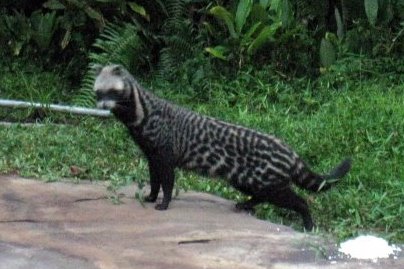 |
| Civets |
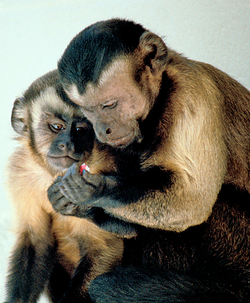 |
| Capuchin Monkeys |
 |
| Alligators |
 |
| Hedgehogs |
 |
| Foxes |
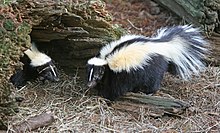 |
| Skunks |
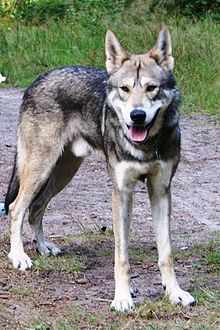 |
| Wolf-Dog Hybrid |
 |
| Sugar Gliders |
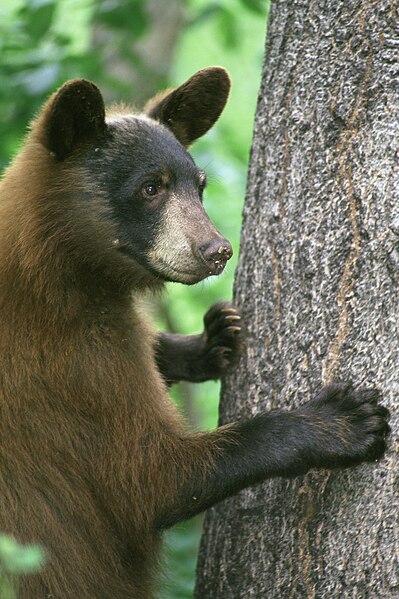 |
| Bears |
_1.jpg/220px-Raccoon_(Procyon_lotor)_1.jpg) |
| Raccoons |
General Inquiry
Exotic pets (animals not native to the land) are very difficult to take good care of. Most people don't realize that until they are too late. Then where do they go? The ASPCA and the Human Society get supplies taxed for abandoned exotic pets. Some animal shelters just don't accept the animals because they don't have the resources or expertise to care for them. If the owner has no place to take the animal, chances are, they'll just let it go fend for themselves.
The more extreme pets such as large cats or monkeys are an even larger issue. Those that want to have a leopard for a pet and get it when it's just a baby think that they're able to tame it like a house cat or obedient dog. Once that cat gets big and shows aggression the owner doesn't know how to react. They can decided to take drastic measures such as removing the fangs of the animal or even setting it free.
The more extreme pets such as large cats or monkeys are an even larger issue. Those that want to have a leopard for a pet and get it when it's just a baby think that they're able to tame it like a house cat or obedient dog. Once that cat gets big and shows aggression the owner doesn't know how to react. They can decided to take drastic measures such as removing the fangs of the animal or even setting it free.
Monday, March 14, 2011
Author Background
My name is Ashley. I'm almost finished with my freshman year at Purdue University North Central, and I plan to move down to the main campus in West Lafayette in the fall of 2011 to study Pharmacy. I currently have a part time job at a clothing place called Rue 21 in Valparaiso, Indiana.
This blog, as well as my previous one about the legalization of marijuana, is for my English class with Dr. Dominic Micer. I picked another topic that I'm passionate about and I plan to educate my readers about the importance of criminalizing exotic pets through this blog. I want to focus on the negative aspects of adopting a wild animal and trying to force it to be a pet. Not all animals are meant to be human companions. The cats and dogs that we adopt today have taken thousands of years to be house-tamed. Even with those thousands of years, many breeds still rebel against their owners, causing many problems.
This blog, as well as my previous one about the legalization of marijuana, is for my English class with Dr. Dominic Micer. I picked another topic that I'm passionate about and I plan to educate my readers about the importance of criminalizing exotic pets through this blog. I want to focus on the negative aspects of adopting a wild animal and trying to force it to be a pet. Not all animals are meant to be human companions. The cats and dogs that we adopt today have taken thousands of years to be house-tamed. Even with those thousands of years, many breeds still rebel against their owners, causing many problems.
Subscribe to:
Posts (Atom)